
When voting closed on September 14, 2026, another part of the first Bangsamoro parliamentary elections began. Election returns had to travel from polling sites to the systems that would receive them. For those of us working on election connectivity, that handoff is where months of preparation have to hold up in the field. ndi.org
Our part in getting election returns through
iOne Resources, Inc., in joint venture with Ardent Networks, Inc., was contracted by the Commission on Elections (COMELEC) to provide Secure Electronic Transmission Services for the BARMM parliamentary elections. For our team, the assignment came down to a practical question. When a polling site was ready to send its election returns, would the connection be ready too?


That question matters in places where connectivity can vary by location and conditions. In Lanao del Sur, the Philippine Information Agency reported that all voting centers had Starlink connectivity ahead of the polls. In Tawi-Tawi, election officials reported that heavy rains disrupted the signal in Languyan on election day. These examples show why we think about field readiness and contingency planning together. A connection that works during testing still has to serve people under the conditions they face on election day. Philippine Information Agency
Every handoff matters
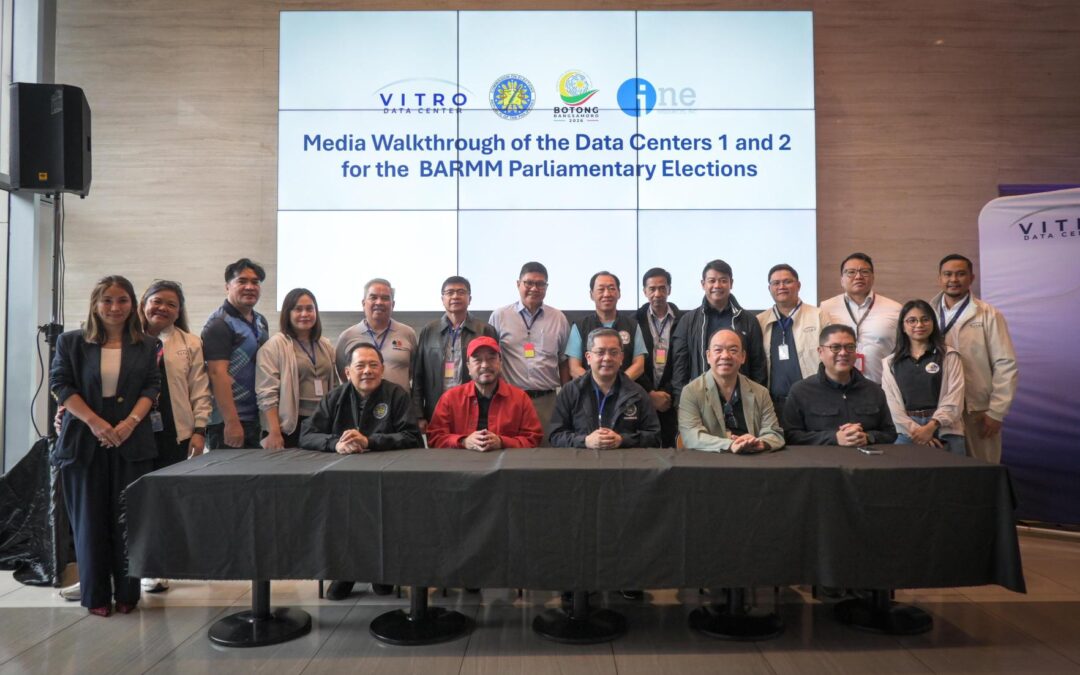
Connectivity at the polling site is one part of the work. The systems at the receiving end also need to be ready. Ahead of the election, iOne joined COMELEC and the Parish Pastoral Council for Responsible Voting (PPCRV) in visiting VITRO’s Makati and Parañaque data centers. PLDT and VITRO supported the election through connectivity and data center infrastructure, including facilities housing servers that would receive returns transmitted by automated counting machines.
That visit put the full path into view. A field team needs to know whether a site can transmit. The receiving team needs to know whether the return arrived. Each team also needs to know whom to call when a handoff fails. Those are the details that make coordination count when the polls close.
The National Democratic Institute’s post-election report recorded that PPCRV had electronically received 99.31% of election returns by the transmission cutoff. Receiving those returns gave citizen monitors the data they needed for their work. That is the practical contribution reliable infrastructure can make to election transparency. ndi.org
We thank COMELEC, PPCRV, PLDT, VITRO, our joint venture partner Ardent Networks, and the field teams and election personnel who carried out the work. For iOne, the experience reinforced a lesson we’ll carry into future deployments. Plan the handoff from the polling site to the receiving system, and give the people at both ends a clear way to respond when conditions change.





One day, sana makarating din sa amon ang ganitong satelite. Libre ba ito kay Mayor?
Is there a demo available online for this solution?
Sana meron din nyan sa amin. Mindoro pls.
Congrats mga pre. Kampai na dyan.
This is great news for the country. Sana tuloy tuloy na.